
Home
About Us
Product Showcase
News
Engineering Cases
Service Support
Solutions
Talent Recruitment
SOYO Mall
Contact Us
Leave a message
Language:en

From Interface Microphones to Two-Way Networked Audio: The Evolution of Wireless Teaching Amplification Technology——How 2.4G Digital Wireless Amplification Rose to Sweep Global Classrooms
Summary : Teaching amplification is the foundational infrastructure of smart education and also a "protective umbrella" for teachers' vocal health. This article systematically reviews the decades-long technological evolution of the teaching amplification industry: from wired desktop boundary microphones and portable amplifiers ("Little Bees") to analog wireless amplification (VHF/UHF) and infrared amplification, and then to the 2.4G digital wireless amplification pioneered by Guangbiao Technology—leveraging advantages such as license-free frequency bands, GFSK digital modulation, automatic frequency pairing at startup, and zero crosstalk across multiple classrooms, 2.4G digital wireless amplification has risen rapidly and swept through classrooms in more than 50 countries worldwide; now, Guangbiao Technology is further promoting a new model of "two-way networked audio + local wireless amplification," deeply integrating local wireless classroom amplification with campus networked audio, opening the next stop of intelligent, networked wireless teaching amplification. This article is also a panoramic industry reference for understanding the development of wireless teaching amplification technology, the selection of teaching amplification systems, and future industry trends.Keywords: teaching amplification, wireless teaching amplification, 2.4G digital wireless amplification, infrared amplification, analog wireless amplification, boundary microphone, portable amplifier, two-way network audio, local wireless amplification, smart classroom
2026-09-21
I. Teaching Amplification: An Underestimated Essential Need in Education
In a standard classroom, a teacher speaks thousands of words per lesson, and after a full day of teaching, the vocal cords remain under prolonged high load. Relevant research and surveys by education departments across various regions all indicate that chronic pharyngitis, vocal cord nodules, and hoarseness are among the most common occupational health problems for teachers. Precisely because of this, teaching amplification equipment has gradually shifted from an "optional add-on" to a school "standard" — it is key equipment for protecting teachers' vocal health, ensuring students can hear clearly and completely, and improving classroom efficiency.
Around this demand, a professional and massive teaching amplification industry has grown up: from early wired amplification equipment, to portable amplifiers, to analog wireless amplification, infrared amplification, and today's mainstream 2.4G digital wireless amplification and networked audio systems. It can be said that the history of the technological evolution of teaching amplification equipment is a history of evolution that "makes it easier for teachers to speak and lets sound travel more freely." This article, following the chronological thread, sorts out the logic of replacement across six major technological eras, and focuses on interpreting the role of Soyo as a driver in this process.
II. Stage One: The Era of Desktop Boundary Microphones—Everything Begins with "Wired"
The first large-scale form of teaching amplification appeared from the 1990s to the early 2000s: the era of desktop boundary microphones (boundary microphones).
The so-called boundary microphone is a type of microphone placed flat on a lectern desktop that picks up sound using the "boundary reflection principle." It connects via audio cable to a constant-voltage amplifier in the classroom, which then drives wall-mounted speakers to produce sound. Compared with earlier simple wired microphones, boundary microphones do not need to be held by hand, are less prone to howling, and their pickup range covers the lectern area, making them the standard configuration for multimedia classrooms and lecture halls of that era.

But its limitations were also very obvious: an audio cable "tethered" the teacher near the podium. Once the teacher stepped down from the podium to tutor students, their voice could no longer be picked up; cable aging, loose connectors, and poor interface contact were also daily headaches for the operations and maintenance department.Free movement, became the first proposition the teaching amplification industry had to solve.
III. The second stage: the era of portable amplifiers ("Little Bee") — teachers' first portable "amplifier"
From the late 1990s to the 2000s, portable voice amplifiersbegan to sweep across classrooms nationwide. Because of their compact size and loud sound, they were affectionately called "Little Bees" by teachers.
Their form was very classic: a waist-worn (or shoulder-carried) portable amplifier main unit, paired with a headset microphone or lavalier microphone, powered by batteries, with sound directly projected from the body's speaker. Teachers could finally carry their voice to every corner of the classroom—stepping down from the podium, getting closer to students, and teaching while patrolling. For the first time, teaching amplification achieved "where the person goes, the sound follows."

Figure 2: The era of portable voice amplifiers ("Little Bee") — teachers wore the amplifier on their bodies, achieving "where the person goes, the sound follows"
Even today, portable voice amplifiers remain active in the teaching aids market thanks to their low price, quick setup, and no installation required, and are the first choice for many new teachers buying their own teaching amplifier. But their ceiling is equally real: the built-in speaker has limited power, making it hard to hear in the back of large classrooms; sound quality is mainly about clarity and lacks depth; the battery needs charging every day and has a limited lifespan; and multiple devices used at the same time may interfere with each other. The industry needs a leap from "wearable external speaker" to "classroom-grade audio."
IV. Phase Three: The Era of Analog Wireless Amplification — The Freedom and Troubles of VHF/UHF
In order to break free from the constraints of the built-in speaker, the industry turned its attention to wireless frequencies.Analog wireless amplification went through two stages successively: VHF (Very High Frequency, approximately 150–260 MHz) and UHF (Ultra High Frequency, approximately 400–900 MHz), using FM frequency modulation to transmit audio: the teacher wears a wireless lavalier microphone or holds a handheld microphone, the receiver in the classroom sends the signal to the amplifier and speakers, and the sound is played back through the classroom's professional speakers.
Compared with the "Little Bee," the advantages of analog wireless amplification are obvious: teachers do not need to carry the main unit, the wireless microphone can move freely, and the sound is played through fixed-installed speakers. Both volume and sound quality have taken a step up, and it can also share one sound reinforcement system with multimedia teaching speakers.
Figure 3: The era of analog wireless amplification (VHF/UHF)—the wireless microphone freed teachers, but "frequency" became a new management challenge
However, the troubles of analog wireless amplification also lie precisely in "frequency": First, the VHF/UHF bands are regulated spectrum resources, and the use of some bands requires applying for a license; second, analog signals have weak anti-interference capability, and adjacent frequencies, TV signals, or even poor-quality power supplies may introduce noise; third, and most critically—in the same teaching building, the analog wireless amplification systems in multiple classrooms cannot be freely used at the same time, and if frequency planning is improper, frequency crossover and mutual class interference will occur, so schools must allocate frequencies systematically and assign dedicated personnel to manage them. For schools with dozens or even hundreds of classrooms, this "frequency engineering" is both expensive and fragile.
V. The Fourth Stage: The Era of Infrared Amplification—the Mutual Non-Interference of "Light"
To fundamentally solve the problem of frequency interference, the industry drew on infrared technology and ushered in the infrared sound amplification era.
The principle of infrared amplification is: the teacher wears an infrared transmitter (infrared microphone), which modulates the audio signal onto infrared light for transmission; infrared receiver panels installed on the classroom ceiling or in the four corners receive the light signal and convert it back into audio. The key characteristic of infrared light is — it does not penetrate walls. This means that the infrared amplification system in the adjacent classroom is naturally isolated from this classroom; no matter how many classrooms use it simultaneously, they will not interfere with each other. At the same time, the sound signal is firmly "locked" within this classroom, providing good security. This characteristic also once made infrared amplification the first choice for teaching amplification in standardized examination rooms, international schools, and high-end classrooms.

Figure 4: The Era of Infrared Amplification — The "non-penetrating" nature of infrared light keeps classrooms from interfering with each other
However, the propagation characteristics of light are both an advantage and a limitation: infrared signals need to maintain a visible line-of-sight transmission, and obstruction, movement, or improper device placement can all cause sound dropouts; strong classroom lighting and strobe lights may also interfere with infrared reception; the transmitter, receiver panel, and wiring installation costs of the entire system are relatively high, making it less friendly for retrofitting old classrooms. The industry is waiting for a wireless teaching amplification technology that is both "non-interfering" and "unobstructed."
Six, Phase Five: The 2.4G Digital Wireless Amplification Era — Pioneered by Soyo Technology, Emerging Rapidly and Sweeping the Globe
After entering the 21st century, the mature applications of the 2.4GHz ISM license-free band in fields such as Wi-Fi and Bluetooth opened a brand-new door for teaching amplification. Shenzhen Soyo Technology Development Co., Ltd. (Soyo, founded in 2005) keenly seized this opportunity, pioneering the 2.4G digital wireless amplification system, creating an entirely new category of teaching amplification.
The core logic of 2.4G digital wireless amplification is to completely replace the "frequency planning" of the analog era with "digital pairing + independent ID": audio is transmitted between the microphone and the speaker (receiving end) via the 2.4GHz band using GFSK digital modulation. After power-on, it automatically enters the frequency pairing (pairing) state, and once pairing is successful, transmission starts automatically. Each system has an independent digital ID, so any classroom and any set of 2.4G digital wireless amplification equipment can be "plug-and-play with no mutual interference"—schools no longer need to do frequency planning, which is precisely the fundamental reason why it has "risen suddenly and swept the globe."
Taking the representative teaching amplification products of Guanbiao Technology as an example, one can intuitively experience the technical level of 2.4G digital wireless amplification:
- Digital Wireless Microphone TP-WTG07: Operating frequency 2400MHz~2483MHz, GFSK digital modulation; automatic frequency pairing on startup, automatic transmission upon successful pairing, transmission power 10dBm, usable distance with wireless speaker up to 15 meters; built-in rechargeable lithium battery, continuous audio transmission time greater than 8 hours; equipped with LCD screen, can display current volume, channel, battery level, charging status; supports EQ male/female voice switching and 12-key custom functions, one pair of microphones is sufficient for various teaching scenarios.
- Digital Wireless Speaker TP-WSD02: Reception sensitivity -85dBm, reception radius 15 meters, 120 channels in total; featuring a 5-inch woofer + 3-inch tweeter, wooden enclosure, and 2.0-channel 60W output — giving teaching amplification a "professional audio-grade" sound quality for the first time.
- Centered around teaching scenarios, Guanbiao has also formed a complete product matrix including the digital wireless amplifier TP-WTA05, digital wireless speaker TP-WSD08, digital wireless receiver TP-WMIC04, long-distance digital wireless audio transceiver, smart wireless pickup, and smart podium all-in-one machine TP-CTS03.
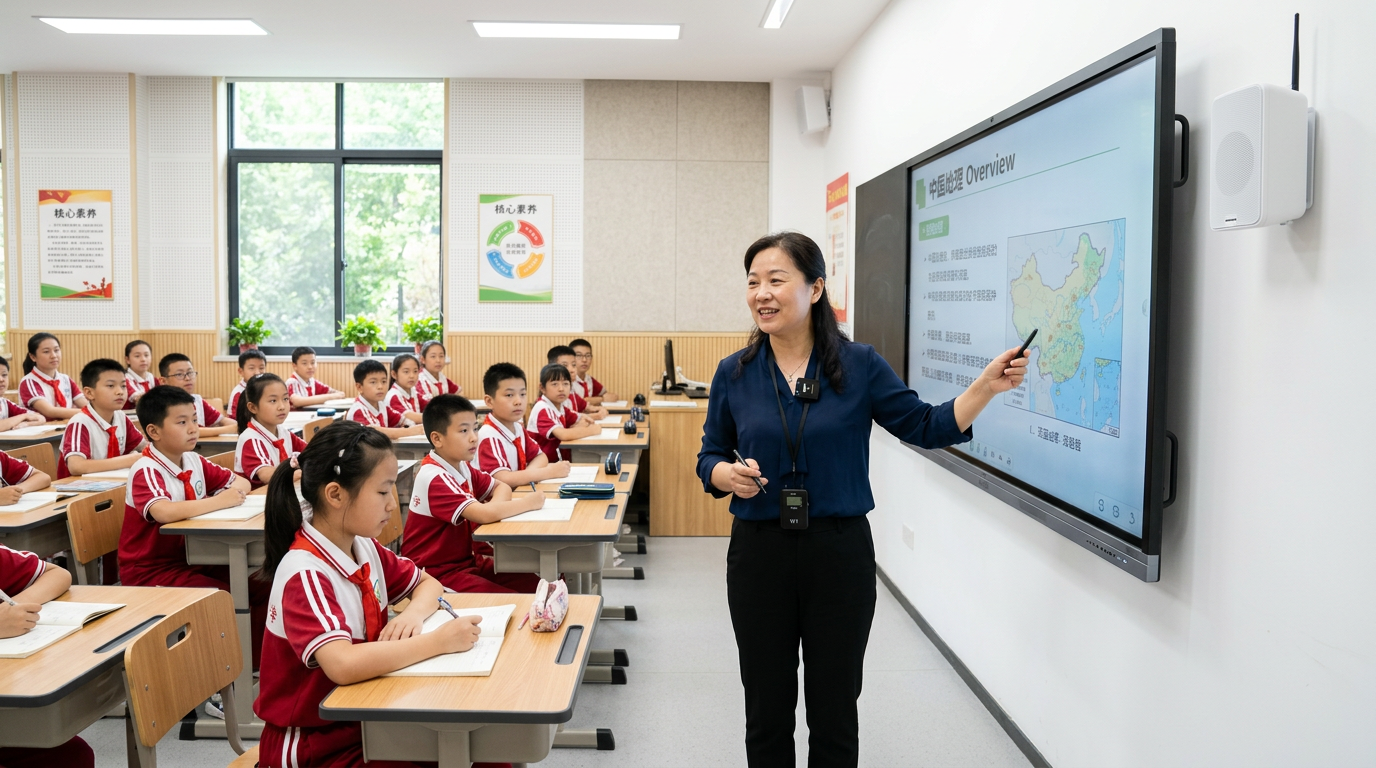
Figure 5: The 2.4G Digital Wireless Amplification Era — Digital pairing, independent ID, ready to use in any classroom without interference


Figure 6: Soyo Technology 2.4G Digital Wireless Amplification System Combo (Digital Wireless Microphone + Digital Wireless Speaker) Figure 7: Soyo Technology Digital Wireless Microphone TP-WTG07 — Automatic frequency pairing, over 8 hours of battery life, LCD display

Figure 8: Soyo Technology Digital Wireless Speaker TP-WSD08 — Wooden enclosure, professional-grade sound quality, Image source: www.chinasoyo.com
With the "killer" technology of 2.4G digital wireless audio amplification, Soyo Technology's teaching amplification products have not only rapidly gained popularity in China, entering numerous campuses including Youyang County Education Commission Youyang No.1 Middle School and Xichang City Chengnan Nine-Year Consistent School, but are also exported to more than 50 countries: its "kilometer sound transmission" long-distance digital wireless audio technology has successively won CES and ISE Innovation Awards, the company has accumulated more than 20 invention patents, and has been approved to build the Guangdong Provincial Digital Wireless Audio Engineering Technology Research Center. From following to leading, Soyo Technology (Soyo) uses 2.4G digital wireless audio amplification to make the "Chinese solution" one of the de facto standards for global wireless teaching amplification.
VII. Phase Six: Bidirectional Networked Audio + Local Wireless Amplification — A New Integrated Model for Smart Classrooms
If 2.4G digital wireless amplification solves the amplification problem "within the classroom," then once campus networks become fully widespread, a new problem emerges: how can sound be connected between classroom and classroom, and between classroom and campus?
Traditional campus broadcasting, bell ringing, listening exams, notification systems, and classroom teaching amplification systems have long been two separate systems, with duplicated wiring, stacked equipment, and cumbersome maintenance. Guanbiao Technology was the first to promote the "two-way network audio + local wireless amplification" model, providing a unified answer for smart classrooms:
- Local wireless amplification: The 2.4G digital wireless amplification architecture continues within the classroom. Teachers wear digital wireless microphones, while the classroom's digital wireless speakers and smart wireless pickup devices handle local sound pickup and amplification, delivering stable sound quality and maintenance-free operation;
- Two-way Network Audio: Classroom audio devices simultaneously become audio nodes on the campus IP network, connecting to the campus network audio platform via network cables—they can both receive network audio from the broadcast center (campus broadcasting, bell ringing, exam listening, emergency notifications) and upload sounds from the classroom in reverse (remote listening, regular recording and broadcasting, two-way intercom, classroom inspection management), truly achieving "one network, two-way communication";
- Unified Platform Management: The wireless amplification status, battery level, channel, and volume of all classrooms are centrally visible and remotely controllable on the platform, upgrading the school's teaching amplification system from "scattered devices" to "digital infrastructure".
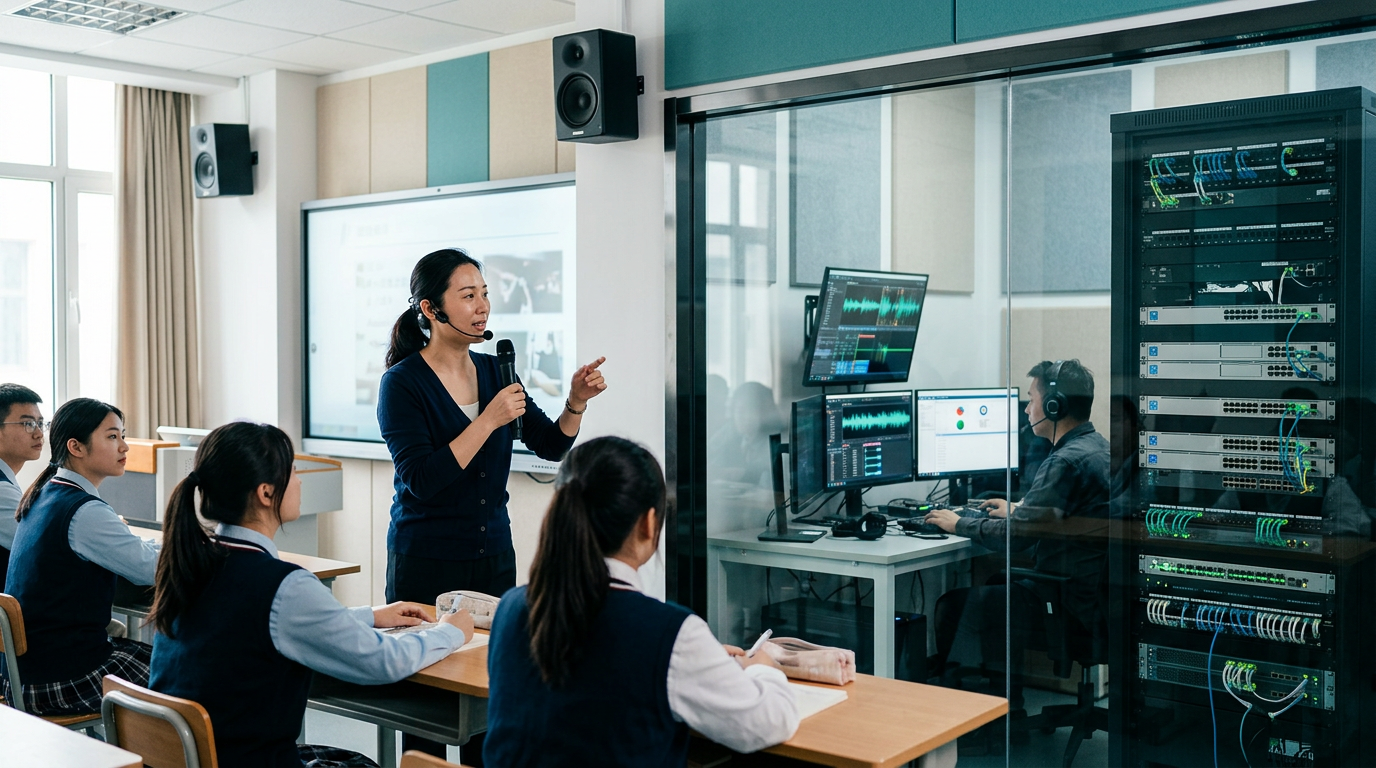
Figure 9: The Era of Bidirectional Networked Audio + Local Wireless Amplification — Bidirectional Integration of Classroom Local Amplification and Campus Networked Audio Platform
This means: a teacher can walk into any classroom, turn on the digital wireless microphone, and it works immediately; at the same time, this classroom is also an "intelligent node" of the campus networked audio system. The teaching amplification system is integrated with campus broadcasting, listening exams, recording and class inspection, and AI voice analysis — wireless teaching amplification is no longer an information silo.
VIII. Overview of the Comparison of Six Major Technological Eras
| Technological Era | Transmission method | Teacher's activity range | Simultaneous use in multiple classrooms | Typical limitations |
|---|---|---|---|---|
| Desktop boundary microphone | Wired transmission | Fixed at the lectern | No crosstalk (independent of each other) | Cable constraints, no sound when away from the lectern |
| Portable voice amplifier (Little Bee) | Direct sound amplification from the device body | Sound follows the person wherever they go | Basically no mutual interference | Limited sound quality and power, requires daily charging |
| Analog wireless amplification (VHF/UHF) | Analog frequency modulation (FM) | Free movement within the classroom | Prone to frequency interference, cannot be used simultaneously at will | Frequency band regulation, weak anti-interference, requires frequency planning |
| Infrared amplification | Infrared light carrier | Free movement within the classroom | No wall penetration, naturally no mutual interference | Requires visible line-of-sight propagation, easily obstructed, high cost |
| 2.4G digital wireless amplification | 2.4GHz digital transmission (GFSK) | Free movement within the classroom | Independent ID, plug and play, no mutual interference | Need to choose reputable brands to ensure digital anti-interference capability; Guanbiao Technology currently has a good reputation |
| Two-way network audio + local wireless amplification | 2.4GHz wireless + IP network | Free movement within the classroom | Naturally no mutual interference, and cross-classroom networked interconnection | Requires campus network and platform support |
Table 1: Comparison of the six major technological eras of teaching amplification (from "wired" to "wireless," from "wireless" to "networked")
IX. Next Stop: AI Voice Interaction and IP Computing Audio
Looking back at decades of the teaching amplification industry, the axis of evolution is clearly visible:from wired to wireless, from analog to digital, from standalone to networked, from sound amplification to intelligence.
As an enterprise deeply engaged in IP computing audio, digital wireless audio, and AI voice interaction, Crowntech has already set its sights on the next stop: enabling teaching amplification systems not only to "project sound" but also to "understand sound"—AI voice enhancement makes every word clear even when teachers speak softly; intelligent pickup and sound field analysis allow the amplification system to automatically adapt to the classroom environment; the combination of network audio platforms and AI can also provide data support for classroom quality analysis and teaching evaluation. It is foreseeable that wireless teaching amplification will evolve from an "amplification tool" into the "auditory system" of smart classrooms.
X. Conclusion
From a single cable of an interface microphone, to a battery of a portable amplifier, to the frequency planning of analog wireless, to a beam of light in infrared amplification, and then to the digital ID of 2.4G digital wireless amplification and the campus-wide network of two-way networked audio—every technological leap in teaching amplification stems from repeated responses to teachers' real pain points. On this path of evolution, Soyo Technology (Soyo), with its pioneering 2.4G digital wireless amplification and the two-way networked audio + local wireless amplification model it is currently promoting, has marked two key technological coordinates belonging to Chinese enterprises.
For schools, understanding this history of technological evolution means grasping the underlying logic of selecting classroom amplification systems: only by prioritizing wireless teaching amplification solutions that support 2.4G digital wireless amplification and can smoothly connect to the campus network audio platform can today's procurement equip tomorrow's smart classrooms.
Shenzhen ChinaSoyo Technology Development Co., Ltd. (ChinaSoyo)
Official website: www.chinasoyo.com Contact email: market@ chinasoyo.com